

The Pattern Behind Productive AI Users
I didn’t understand it at first — but once I saw it, everything made sense


Lately, I’ve noticed something strange in my own work.
AI hasn’t become more powerful.
I haven’t changed tools.
I haven’t even learned anything new.
And yet — some weeks feel lighter, almost calm.
Other weeks feel crowded and mentally noisy.
Nothing obvious explains the difference.
That inconsistency started bothering me more than any single AI problem ever did.
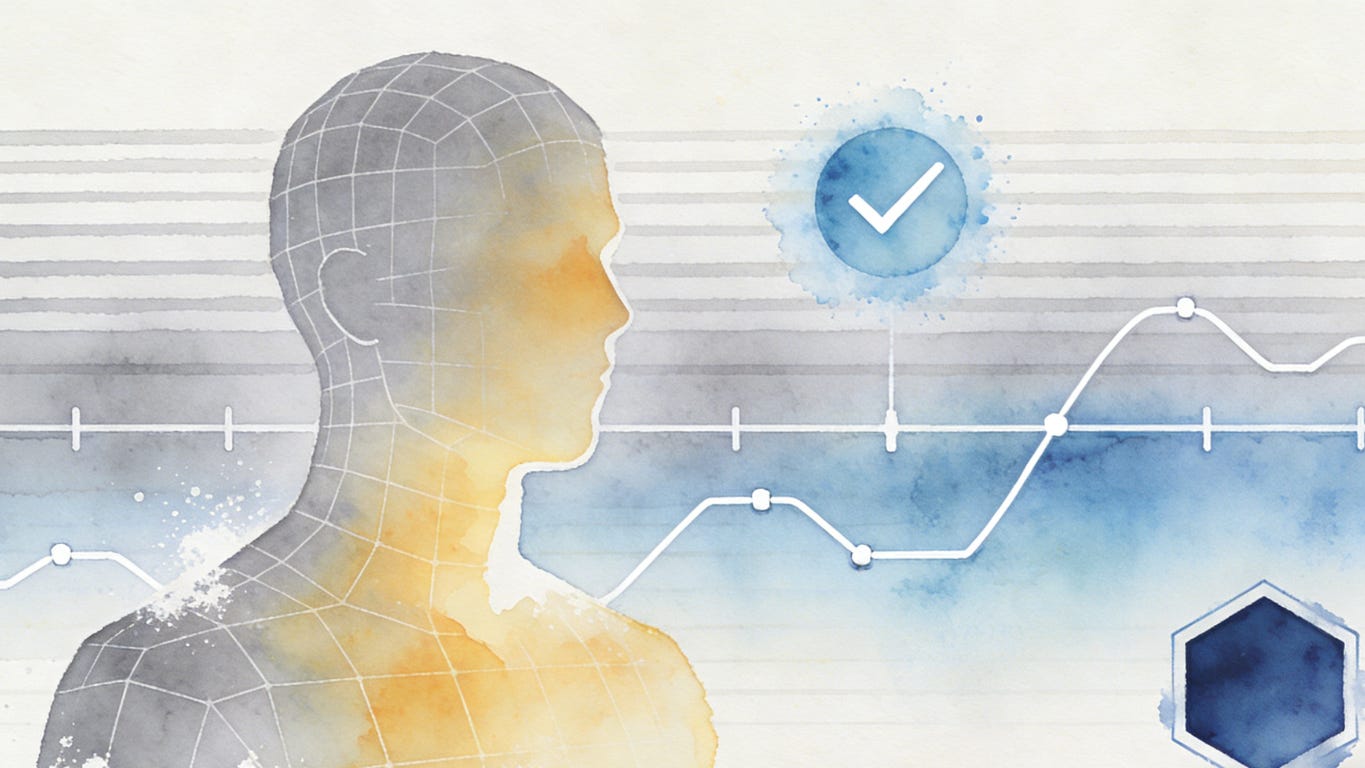
Something Didn’t Add Up
What caught my attention wasn’t what AI could do —
it was when it worked well.
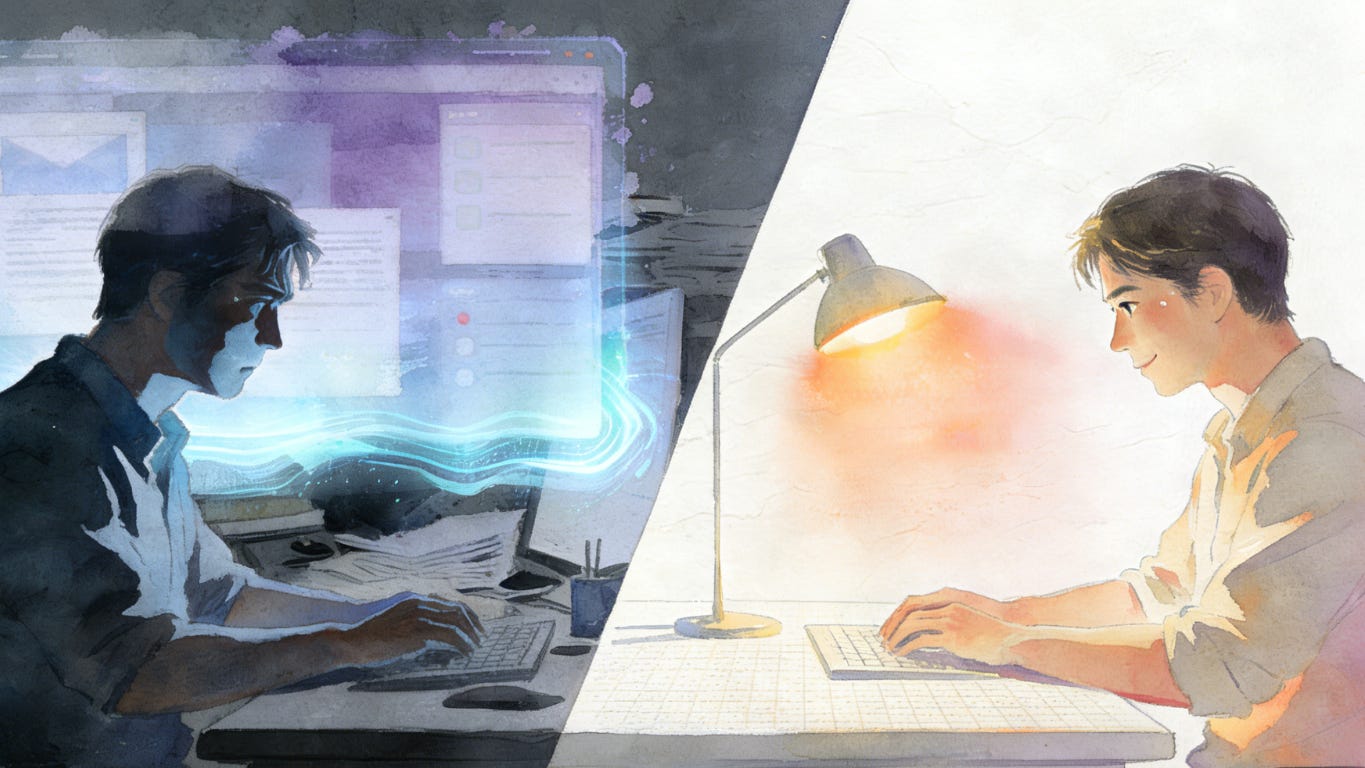
The calmer weeks shared a quiet quality:
decisions felt lighter
tasks felt clearer
AI stayed in the background
The difficult weeks felt crowded:
AI showed up everywhere
every task felt like it needed “AI input”
more time was spent deciding how to use AI than actually doing the work
Same tools.
Completely different experience.
That’s when I realized there was a pattern —
just not the kind people usually talk about.
The Pattern Most People Miss
It wasn’t about skill.
It wasn’t about prompts.
It wasn’t about finding the “right” AI.
The difference appeared before AI was even involved.
When AI entered moments that were already unclear, rushed, or emotionally loaded, it amplified the noise.
When it entered moments that were already simplified and grounded, it quietly helped.
AI didn’t create clarity.
It responded to whatever state it entered.
Once I saw that, I couldn’t unsee it.
How the Pattern Shows Up in Real Days
You start noticing it everywhere.
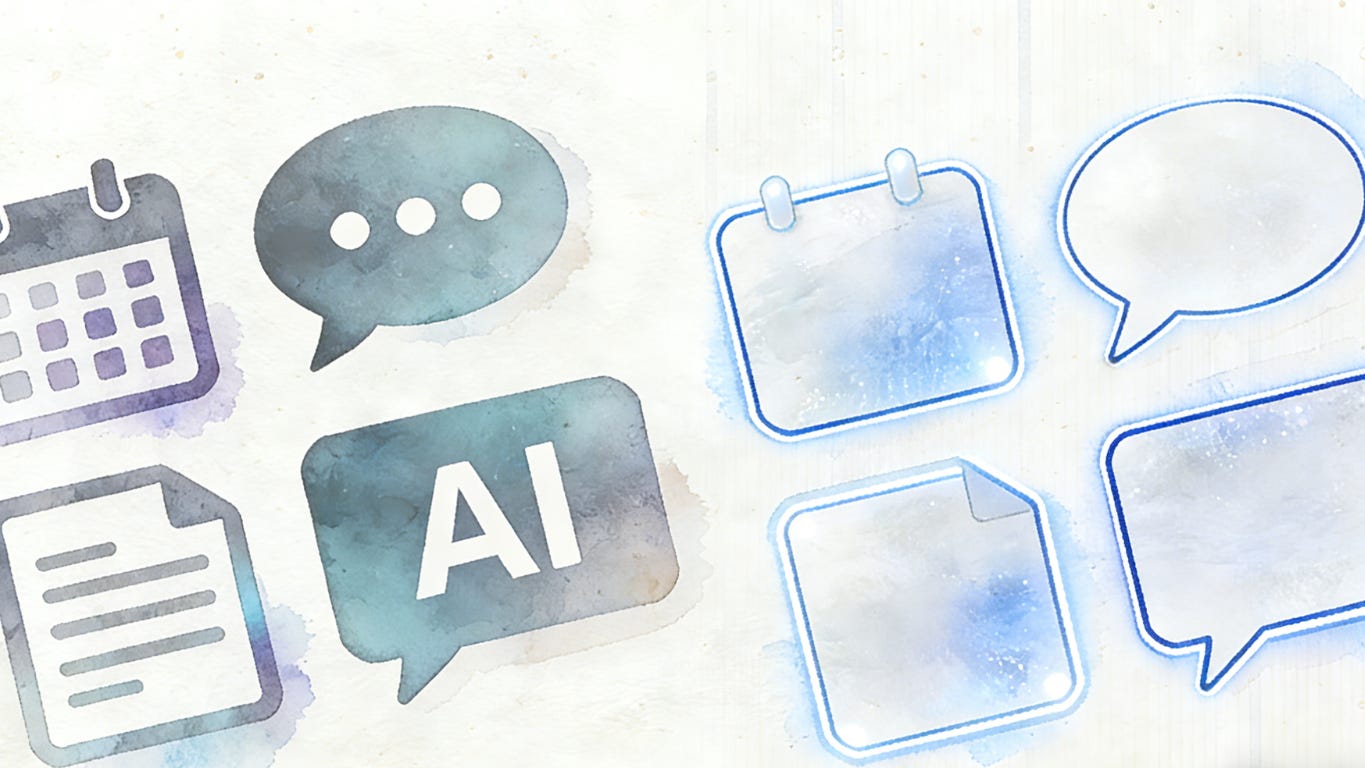
Adding AI to a messy to-do list doesn’t reduce stress — it multiplies options.
Asking AI to plan a week you haven’t thought through just creates more reshuffling.
Letting AI weigh in on every decision turns thinking into negotiation.
But when the ground is already stable:
AI drafting removes friction instead of adding revisions
AI summaries replace repetition instead of creating more reading
AI support feels like relief, not pressure
Same AI.
Different sequence.
Why This Keeps Getting Overlooked
Most AI advice starts too late.
It begins with:
tools
workflows
optimization
scale
By that point, people are already overloaded.
So AI gets layered onto unstable systems —
and when it feels overwhelming, people assume they’re “using it wrong.”
What’s actually off is the order.
Calm doesn’t come from capability.
Capability only feels good after calm is already present.
Naming the Pattern
Eventually, I needed language for what I was seeing.
I started thinking of it as AI Minimalism —
not a rulebook, not a productivity philosophy, but a way of noticing sequence.
Clarity before focus.
Focus before automation.
Boundaries before confidence.
Not because it’s ideal —
but because every other order breaks under real life.
Why This Moment Matters
AI is moving faster than most people can comfortably adapt.
Some respond by adding more.
Others quietly pull back.
Both reactions miss something important.
There is a way to work with AI that feels sustainable —
but it starts with recognizing the pattern, not chasing the tools.
Once you see it, the question changes from
“What should AI do for me?”
to
“Is this moment ready for AI at all?”
That question alone removes more pressure than most features ever will.
What Comes Next
Seeing the pattern helped — but it wasn’t enough on its own.
Patterns fade when weeks get busy.
When decisions stack up.
When old habits return.
In the next post, I’ll share the simple structure I use to keep this pattern intact — something practical enough for real weeks, not ideal ones.
Not something to master.
Just something steady to lean on.