

The Quiet Stack: How to Build a Simple AI System That Saves You 5–7 Hours Every Week
Why most people use AI the loud way — and how to build a calm, efficient workflow instead.


If you feel like AI made your work louder, not quieter, you’re not alone.
Every week, I talk to creators, small business owners, and professionals who say the same thing:
“I know AI can help me…
but the tools, the prompts, the updates — everything feels chaotic.”
The truth is:
Most people are not suffering from a lack of AI.
They’re suffering from an excess of it.
Too many tools.
Too many overlapping features.
Too many promises.
AI Minimalism exists for one purpose:
To help you build a quiet, focused AI stack that works with your brain — not against it.
Today’s post shows you exactly how.
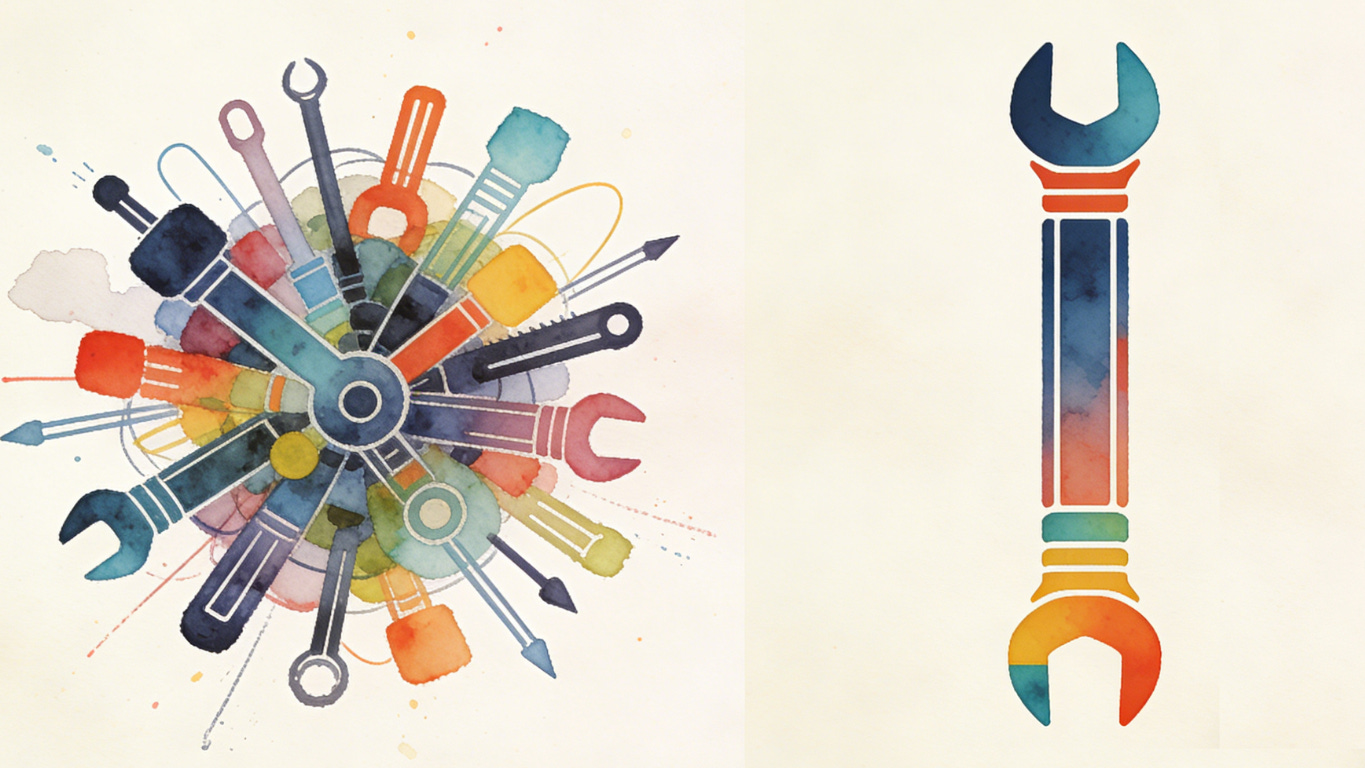
The Problem: You Don’t Have a System — You Have a Pile
Most people adopt AI the same way they adopt new apps:
“Ooh this tool looks cool.”
“Maybe this one is better.”
“Everyone says this one is the future.”
And suddenly you’re using:
ChatGPT for writing
Claude for rewriting
Notion AI for planning
Perplexity for research
A random Chrome extension for summarizing
And three different AI image tools
Plus emails from a dozen startups announcing their new AI feature
This isn’t a stack.
This is a noise machine.
It’s not your fault.
The industry pushes you toward tool accumulation because it benefits them.
But clarity comes from the opposite direction.
The Quiet Stack: One AI System, Three Layers
A calm, efficient AI setup has only three layers.
Not tools.
Layers.
Layer 1 — Your Primary Brain Pair (Core AI)
This is the one tool that does 70% of your work.
Writing
Planning
Drafting
Summarizing
Explaining
Polishing
Brainstorming
You don’t need five tools to do this.
One is enough.
The rule:
Pick one AI assistant you trust and build around it.
Layer 2 — Your Workflow Automations (Routines, Not Tools)
Here’s what most people get wrong:
Automation isn’t “integrations.”
It’s repeatable prompts and sequences.
Examples:
Your weekly content outline generator
Your client email response system
Your product description workflow
Your research → summary → draft pipeline
These are processes, not apps.
Once you develop your 5–7 core workflows, your productivity jumps instantly.
This is where the 3-Day AI Plan framework becomes powerful:
It helps you identify the workflows that save the most time, not just the interesting ones.
Layer 3 — Your Optional Specialist Tools
You only add these after Layers 1 and 2 are stable.
Examples:
An AI image tool for brand artwork
A meeting transcription app
A CRM with AI built-in
A business dashboard AI helper
Notice something:
All these tools serve a specific, rare, non-repetitive function.
They are not your daily driver.
They are specialists.

How to Build Your Quiet Stack in 15 Minutes
Here’s a simple assignment you can do right after reading:
Step 1 — Choose your main assistant
Choose one tool for:
writing
drafting
planning
summarizing
communication
content structure
If you already know your favorite, lock it in.
If not, choose the one that feels calmest to use.
Step 2 — List your weekly repeating tasks
Examples:
Client messaging
Daily planning
Instagram captions
Research
Email replies
Content outlines
Sales page drafts
SOP writing
Pick 5 of these.
These become your first workflows.
Step 3 — Turn each into a simple prompt system
For each task, write a base prompt:
“You are my planning assistant. Each morning, generate today’s plan using my priorities, deadlines, and weekly focus.”
Simple.
Reusable.
Consistent.
Calm.
This is the real “automation.”
Not Zapier, not plugins — consistency.
Step 4 — Add specialist tools last (only if needed)
Only add extra tools when:
You know exactly why you need them
They solve a real workflow gap
They remove complexity instead of adding it
If a tool doesn’t make your life quieter, it doesn’t belong.
The Result: 5–7 Hours Saved Weekly
When you stop switching tools…
When your workflows become predictable…
When your assistant knows you…
You eliminate the hidden mental resets that cost you the most time.
That’s where clarity comes from.
And clarity is the asset most people don’t even realize they’re missing.

If you want, I can turn this post into:
a downloadable PDF
a shareable infographic
a mini “Quiet Stack” template for subscribers
a companion image set that matches AI Minimalism’s style
Just tell me.